

The Social Benefits of Exercise: Why Moving with Others Matters for Aging

Studies show that a large proportion of older adults are socially isolated and lonely. Specifically, in the United States, about 24% of adults aged 65+ are socially isolated and over one-third report feeling lonely. Globally, 11.8% of older adults experience loneliness.
Social isolation and loneliness may sound alike. They are related to each other but different. Social isolation is when you lack social relationships, contacts, and support from others. By contrast, loneliness is the distressing experience when your relationships are perceived to be poorer in quantity and quality than desired.
You can measure social isolation by how many relationships you have, whereas loneliness is measured more on the quality of those relationships. Though they are different, both social isolation and loneliness have been linked to negative outcomes including heart attack, diabetes, depression, anxiety, and distress. A lack of social connection has been found to be as harmful to your health as smoking 15 cigarettes per day.
It is well known that regular physical activity is one of the most effective ways to achieve healthy aging, but did you know it has the added benefit of combating social isolation and loneliness in older adulthood? An abundance of research supports that physical activity is associated with lower risk of cancer, depression, dementia, Type 2 diabetes and cardiovascular disease, and it is also associated with a 31% to 35% lower likelihood of social isolation and 15% to 30% lower likelihood of severe loneliness in older adults.
What Type of Exercise is Right for Me?
Physical activity can be anything that moves your muscles and expends energy, and exercise is a type of physical activity. In daily life, examples of physical activity are most often categorized as occupational, sports, conditioning, household, or other activities, where exercise is considered any structured and planned physical activity. Both are movements of the human body, and the more you move, the more health benefits you will experience.
However you choose to move, all major guidelines recommend accruing at least 150 minutes weekly of moderate-to-vigorous physical activity, which is generally defined as activity that increases your heart rate and breathing but where you can still talk (e.g., brisk walking). For some, this may seem like a lot of activity, especially for those who aren’t currently active.
How Does Exercising with Others Support Healthy Aging?
Evidence shows that even modest increases in daily activity, such as increasing your step count by 1,000 extra steps per day, can reduce mortality risks. And the more you increase your daily movement, the more health benefits will increase.
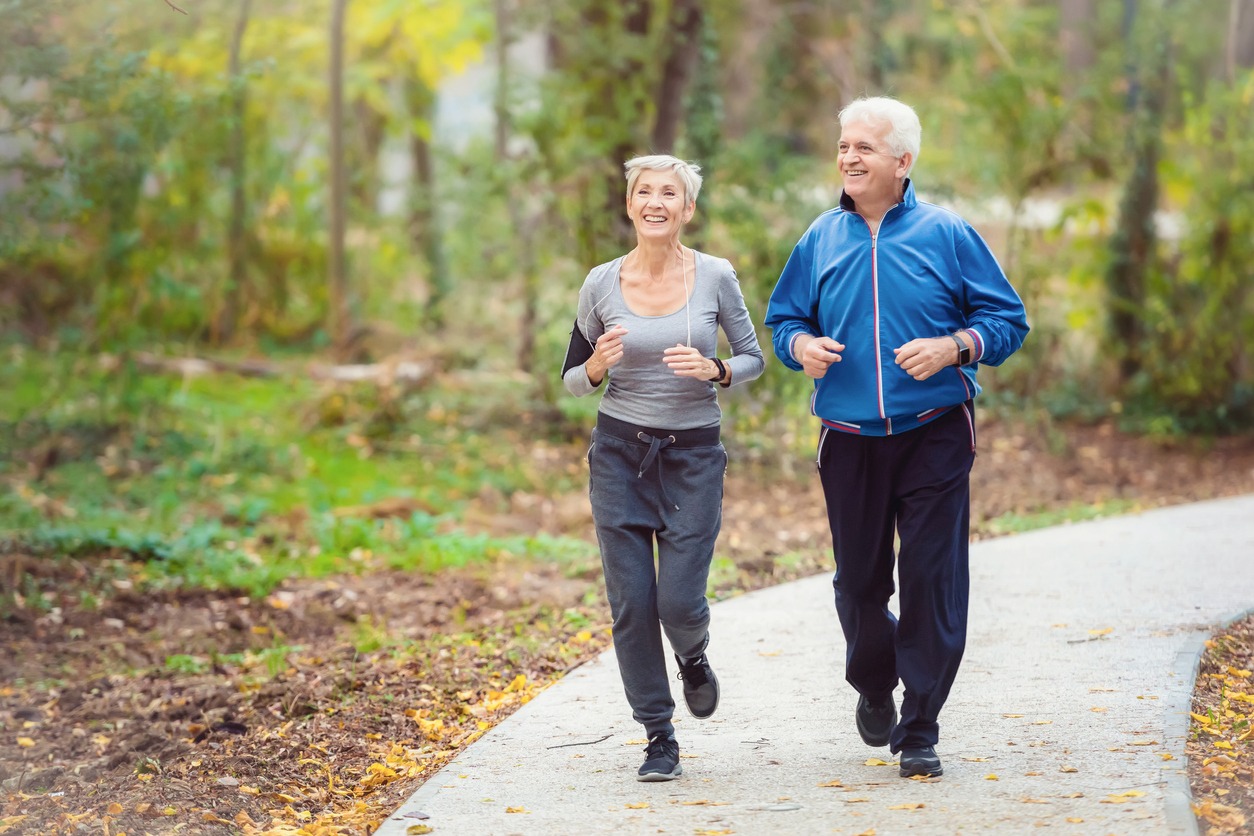
Sounds pretty good, right? Well, it’s even better because for older adults, participating in daily physical activity with others not only will help you age well and experience health benefits, but it can also combat social isolation and loneliness. It’s a win-win.
If you’re looking for ideas, there are several recreational sports that stand out as being a good fit for older adults and that are linked with longevity benefits: tennis, cycling, golf and swimming.
Studies from Denmark, the US and Britain collectively found that tennis players lived almost 10 years longer than their peers that did not participate in any activities, that playing a racket sport was linked to a 16% lower risk of death compared to other sports or exercise types studied, and when compared to no activity at all, racquet sports and cycling reduced risk of death by 47% and 15%, respectively.
In a US-based study of nearly 275,000 older adults, cycling was linked to 3% lower risk of death, golf was linked to a 7% lower risk, and swimming was linked to a 5% lower risk, compared with those who did other activities.
And these activities are not only good options for being social but are easier on the body. The key is to figure out which one you find most enjoyable, because the best exercise is the exercise you will do consistently.
So, however you decide to get moving, keep it consistent, keep it enjoyable, and keep it social. This translates into an optimal strategy for long-term health and well-being.
More Articles

How All-or-Nothing Thinking Derails Exercise – and How to Change That
All-or-nothing thinking occurs when someone is not willing or cannot adhere perfectly to their intentions or “ideal” plan. As it pertains to exercise, this results in someone choosing not to exercise at all rather than modifying their plan to get some benefit rather than none.

A Little Movement is Better Than None: How Small Micro-Workouts Can Have a Big Impact
Exercising in large chunks of time is not feasible for everyone. Fortunately, smaller bouts of exercise are a great way for older adults to maintain or improve their physical function.
Physical Activity for Older Adults: It's Never too Late to Improve Your Health
Despite common misconceptions, older adults can benefit from engagement in physical activity.
Search Healthy Living
Keyword
Become A Member
Have a health-related topic you'd like to cover? Members can submit Healthy Living articles for consideration!

